

How Does a Capacitive Sensor Work? | Basic Working Principle
How Does a Capacitive Sensor Work? | Basic Working Principle


Capacitive sensing has quietly become one of the most widely used detection technologies in modern electronics. From smartphones and industrial control panels to automotive interfaces and smart home devices, the principle behind how does a capacitive sensor work is both elegant and highly practical. It relies on a fundamental electrical property—capacitance—to detect presence, proximity, or touch without requiring mechanical movement.

What is a capacitive sensor in simple terms?
A capacitive sensor is a device that detects changes in electrical capacitance to identify the presence, movement, or properties of an object. Unlike mechanical switches, it does not rely on physical contact or moving parts.
In simple terms, it works like an invisible field around a sensing surface. When an object enters this field, it slightly alters the electrical conditions. The sensor detects this change and converts it into a usable signal.
To make this easier to visualize, think of it as:
- A surface that “feels” nearby objects through electric fields
- A system that reacts to changes rather than direct pressure
- A non-contact sensing method that improves reliability and lifespan
Capacitive sensors are especially useful in environments where traditional switches may wear out, collect dust, or fail under repeated use.
How does a capacitive sensor detect objects?
A capacitive sensor detects objects by measuring variations in capacitance between its electrode and the surrounding environment. This process is continuous and highly sensitive.
The sensing mechanism typically involves three elements:
- A conductive electrode (sensor plate)
- A reference ground
- A dielectric medium (air, plastic, or other materials)
When no object is present, the capacitance remains stable. However, when an object—especially one with conductive or dielectric properties—enters the sensing field, it alters the electric field distribution. This change increases or decreases the measured capacitance.
The detection process can be summarized in steps:
- The sensor generates an electric field around its surface
- An object approaches and disturbs the field
- The capacitance changes due to the object’s properties
- The internal circuit detects the variation
- A signal is triggered or interpreted by a controller
This method allows capacitive sensors to detect not only solid objects but also liquids, powders, and even human touch.
How does a capacitive sensor work?
To fully understand how does a capacitive sensor work, it is important to look at both the physical principle and the electronic implementation. At its core, a capacitive sensor behaves like a capacitor. A capacitor consists of two conductive plates separated by a dielectric material. The capacitance depends on the area of the plates, the distance between them, and the dielectric constant of the material in between.
In a capacitive sensor:
- One plate is the sensor electrode
- The second “plate” is often the approaching object or ground
- The dielectric is the surrounding medium
The working process involves:
- Field Generation
The sensor electrode creates an electric field that extends outward. - Field Interaction
When an object enters the field, it changes the effective dielectric environment. - Capacitance Variation
The capacitance increases or decreases depending on the object’s properties. - Signal Conversion
The sensor’s circuit converts the capacitance change into a measurable electrical signal. - Output Decision
The system determines whether the change exceeds a threshold and triggers an action.
Modern capacitive sensor circuits are often integrated into microcontrollers or dedicated ICs, making them compact and efficient. At Yu An Electronics, similar sensing principles are frequently integrated into membrane switch designs, combining durability with responsive touch performance.
What is capacitance and how does it relate to sensing?
Capacitance is the ability of a system to store electrical charge. It is a key parameter that defines how capacitive sensors operate.
Mathematically, capacitance is expressed as:
C = ε × (A / d)
Where:
- C is capacitance
- ε is the dielectric constant
- A is the electrode area
- d is the distance between electrodes
In sensing applications, this equation explains why:
- Larger electrode areas increase sensitivity
- Closer objects create stronger responses
- Materials with higher dielectric constants produce larger changes
In practical terms, capacitance changes when:
- A human finger approaches a touchscreen
- A liquid level rises inside a container
- A plastic or glass barrier is introduced
This relationship allows capacitive sensors to detect not just presence, but also proximity and material differences.
Can capacitive sensors work through plastic or glass?
Yes, capacitive sensors can work effectively through non-conductive materials such as plastic or glass. This is one of their most attractive features. Because capacitive sensing relies on electric fields rather than direct contact, the sensing surface can be placed behind a protective layer. This makes the design more robust and easier to clean.
Common overlay materials include:
- Glass panels (used in smartphones and touch displays)
- Plastic films (used in membrane switches)
- Acrylic or polycarbonate covers
The thickness and dielectric properties of the material will influence performance. Thicker materials reduce sensitivity, while high-quality dielectric materials improve signal consistency. This capability is widely used in industrial and consumer electronics, where sealed interfaces are required for hygiene, durability, or environmental protection.
Do capacitive sensors need physical contact to work?
Capacitive sensors do not require physical contact. They can detect objects through proximity, which is a major advantage over mechanical switches.
This non-contact capability enables:
- Touchless interfaces in medical or public environments
- Proximity detection for automation systems
- Gesture-based control in advanced devices
However, the detection range is typically limited. The sensor is most sensitive within a short distance, usually a few millimeters to a few centimeters, depending on design. In applications such as touchscreens, the system is tuned to detect direct touch. In proximity sensors, the sensitivity is increased to detect objects before contact occurs.
What materials can affect capacitive sensor performance?
The performance of a capacitive sensor depends heavily on the material properties of nearby objects and the environment.
Materials influence sensing in the following ways:
- Conductive materials (like metal or the human body) produce strong signals
- High-dielectric materials (like water) significantly change capacitance
- Low-dielectric materials (like air) have minimal impact
Environmental factors also play a role:
- Humidity can increase sensitivity
- Temperature changes may affect stability
- Electrical noise can interfere with measurements
To ensure reliable operation, engineers often implement calibration and filtering techniques. At Yu An Electronics, when integrating capacitive sensing into membrane switch products, material selection and environmental testing are carefully optimized to ensure stable performance across different conditions.
How do touchscreens use capacitive sensing?
Capacitive touchscreens are one of the most familiar applications of this technology. They use a grid of electrodes to detect touch points with high accuracy.
There are two main types of capacitive touchscreen technologies:
- Surface capacitive sensing
- Projected capacitive sensing (PCAP)
The working process in a touchscreen involves:
- A transparent conductive layer creates an electric field
- When a finger touches the surface, it draws a small amount of charge
- The system detects the change at specific coordinates
- The touch position is calculated and processed
Projected capacitive technology allows for multi-touch functionality, which is why modern smartphones can detect multiple fingers at once.
This approach offers:
- High sensitivity
- Fast response time
- Smooth user experience
What’s the difference between capacitive and resistive sensors?
Capacitive and resistive sensors are both widely used, but they operate on entirely different principles. Capacitive sensors rely on changes in electric fields, while resistive sensors depend on physical pressure to create electrical contact.
Here is a clear comparison:
| Feature | Capacitive Sensor | Resistive Sensor |
|---|---|---|
| Working Principle | Capacitance change | Pressure-based resistance |
| Input Method | Touch or proximity | Physical pressure |
| Sensitivity | High | Moderate |
| Multi-touch Support | Yes | Limited |
| Durability | High (no moving parts) | Lower (mechanical wear) |
| Transparency | High (used in displays) | Lower |
| Cost | Higher | Lower |
In most modern applications, capacitive sensors are preferred for user interfaces due to their responsiveness and durability. Resistive sensors are still used in cost-sensitive or rugged environments.
Where are capacitive sensors commonly used?
Capacitive sensors are used across a wide range of industries due to their versatility and reliability.
Typical applications include:
- Consumer electronics (smartphones, tablets, touch panels)
- Automotive systems (touch controls, proximity sensors)
- Industrial automation (level detection, object sensing)
- Medical devices (touch interfaces, hygiene-sensitive controls)
- Home appliances (touch buttons, smart controls)
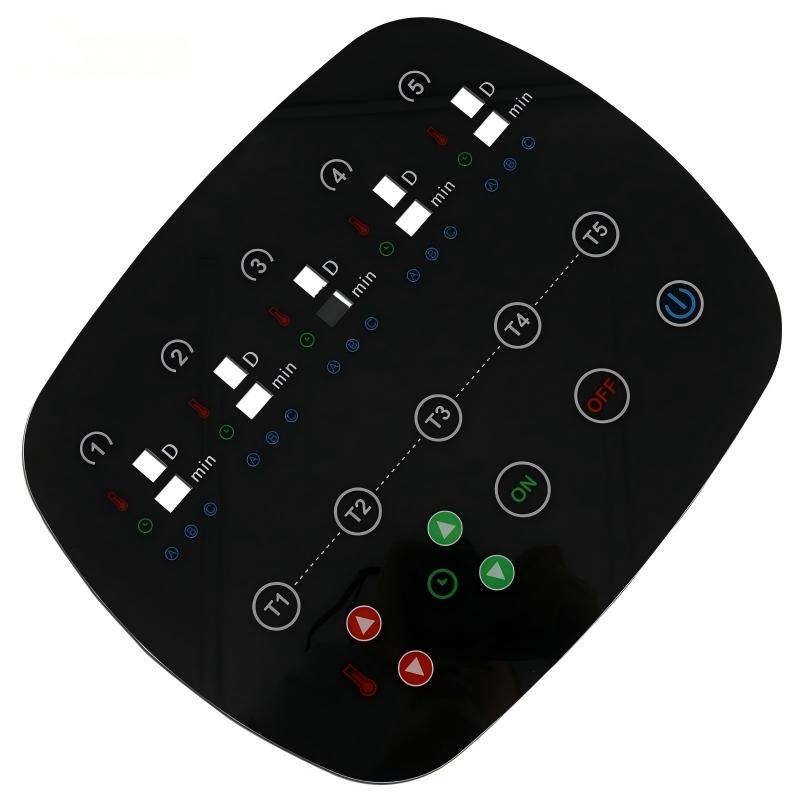
In addition, capacitive sensing is widely integrated into membrane switch panels, offering a sleek and durable alternative to traditional buttons. Yu An Electronics provides customized solutions that combine capacitive sensing with robust membrane switch structures, ensuring long-term performance in demanding environments.
Summary:
Capacitive sensing is a powerful and flexible technology built on a simple physical principle: detecting changes in capacitance. By measuring how electric fields are affected by nearby objects, capacitive sensors can identify touch, proximity, and material differences without mechanical contact. This approach enables modern user interfaces that are clean, responsive, and durable. From touchscreens to industrial control panels, capacitive sensors continue to shape the way we interact with electronic systems.
If you are exploring capacitive sensing solutions for your product—especially membrane switches or custom interfaces—professional engineering support can make a significant difference. For more information or project inquiries, feel free to contact: sales@best-membraneswitch.com
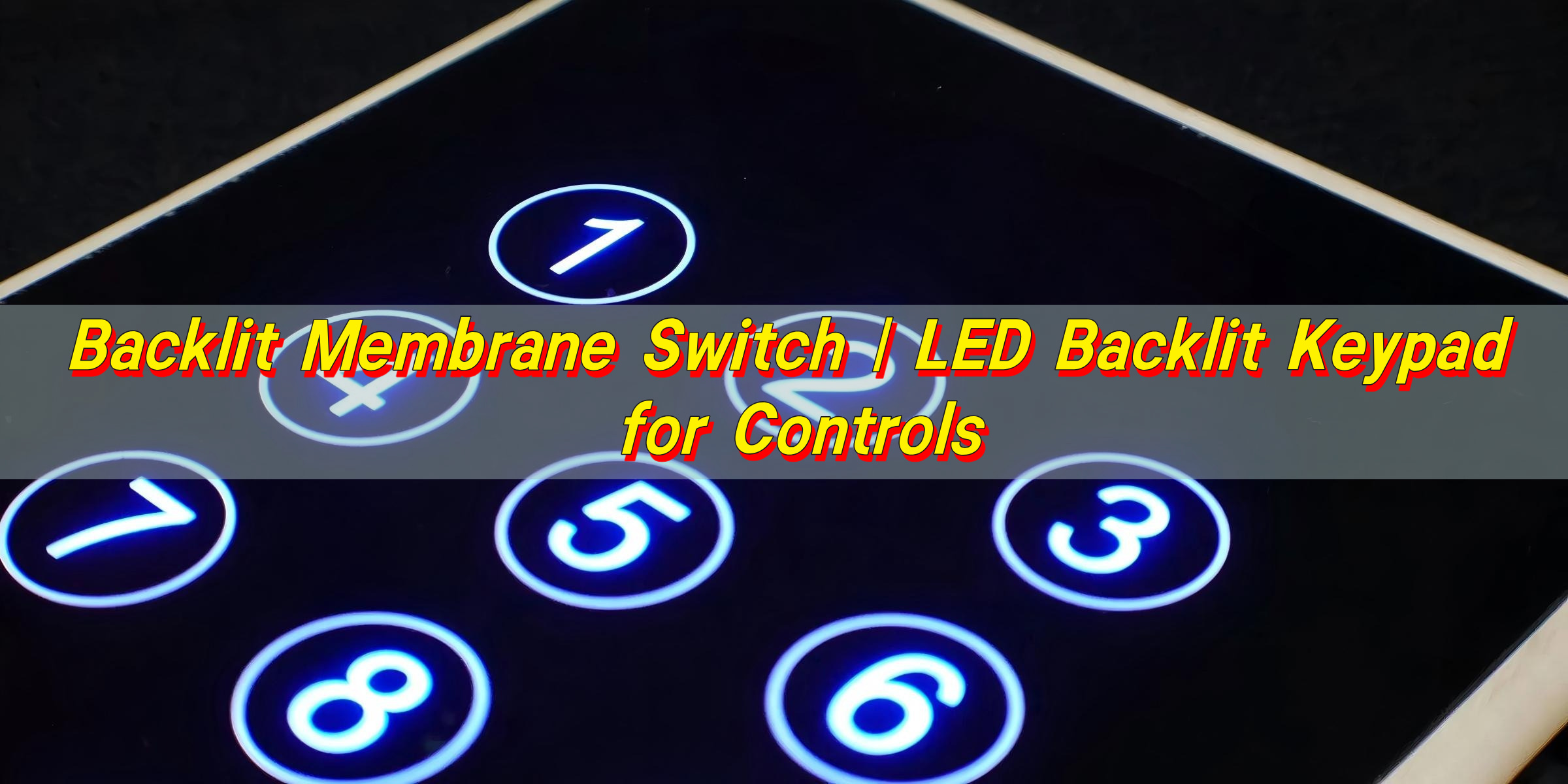
Backlit Membrane Switch | LED Backlit Keypad for Controls
Durable backlit membrane switches with even LED lighting, good tactile feel, and long life for industrial and medical control panels. What is a backlit membrane switch? A backlit membrane switch is a user interface that combines a traditional membrane keypad structure with integrated lighting. It allows symbols, icons, and text on the panel to remain ...
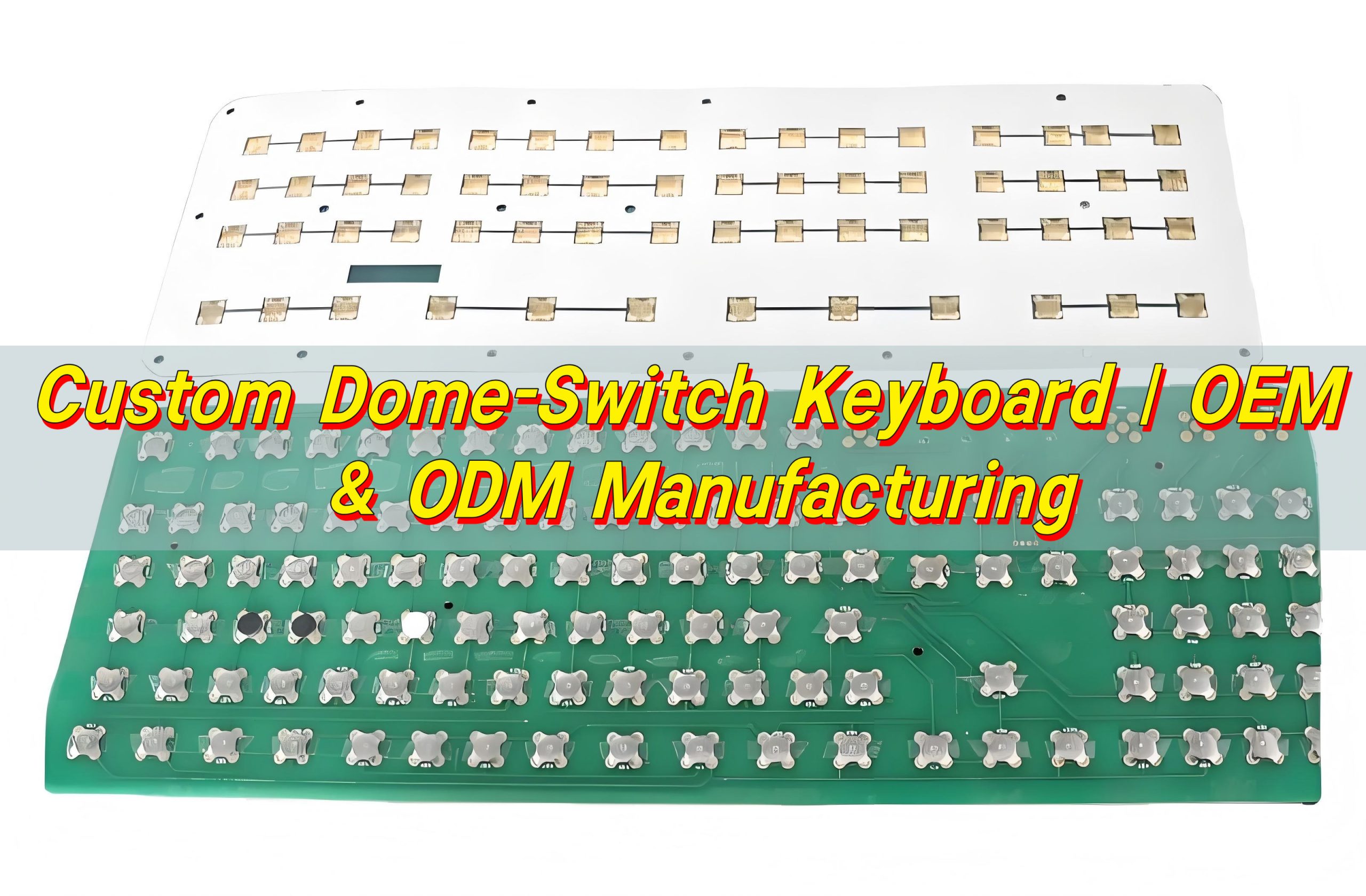
Custom Dome-Switch Keyboard | OEM & ODM Manufacturing
What is a dome switch keyboard? A dome-switch keyboard is a type of input device that uses a flexible dome structure to register key presses. Instead of relying on separate mechanical components for each key, this design uses either rubber domes or metal domes placed over a circuit layer. When pressed, the dome collapses and ...

Membrane Switch Panels Manufacturer | Custom Control Panels
Membrane switch panels sit at the core of many modern control interfaces, from medical devices to industrial equipment. When businesses look for a reliable membrane switch panels manufacturer, they are not just buying a product—they are choosing a long-term partner that shapes usability, durability, and overall product performance. What is a membrane panel? A membrane ...

Contact us online


